Please use TryChooser

Recently there were some improvements to the trychooser and the landing of those changes led to a couple of bugs[1][2] being discovered and quickly fixed.  It is thanks to those who are regularly using the trychooser that we are able to find bugs quickly and also continue to improve the tryserver.

Right now there are over 350 backed up test/talos requests for the tryserver and when I checked our report for trychooser usage it shows that the average number of users pushing with a try syntax has fallen below 50% where it used to be closer to 60%.

I encourage you to please use the trychooser syntax as much as possible. If you do not need every single try result for your patch, do not just push to try and use up all the resources needlessly. Take a moment to insert some try syntax into your commit message.

See https://wiki.mozilla.org/Build:TryChooser for details and http://people.mozilla.org/~lsblakk/trychooser/ for a simple try syntax builder.

Thanks in advance.

Impending TryChooser change you should know about

On Monday November 29th there will be a bug fix landed on the TryChooser that will change how you use it:

Removed: -m,–mobile argument for requesting mobile platforms.
ALL platform selections will use the -p,–platform argument (as requested by developers)

This change is part of a larger back-end change which will improve try by making new platforms or test/talos suites added to mozilla-central dynamically available to tryserver. This also means the Mozmill test suite will be enabled for try when this patch lands on Monday.

I will update the TryChooser wiki and the trychooser syntax web helper. If anyone is using other tools to help with using trychooser, please update accordingly.

What will be useful once this lands is a way to give a user-friendly, and dynamically-generated, list of what platforms/talos/test options are available to try. Any ideas?

Playing with Audio Visualization

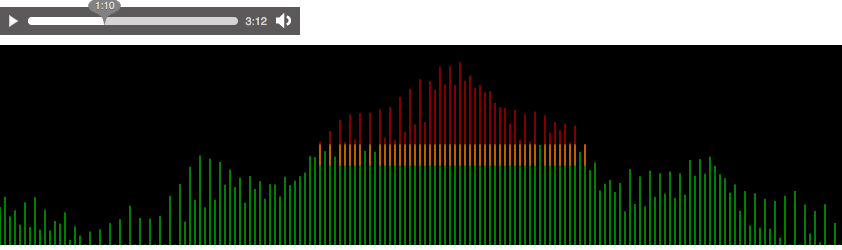
After Dave’s blog post put out the call for 50 visualizations using the new Audio API in Firefox 4 I decided it was time to stop thinking about learning processing and its .js version and time to start doing things with it.  So I took a few hours on Saturday to poke at the code that Dave put up and after a lot of shots in the dark I came up with this but I was disappointed in how simple my results seemed after so much time spent.  Today I went back to the book and learned a few more processing tricks which inspired me to hack on the audio visualizations again.

For my second attempt I really tried to understand more what the javascript functions were doing, how the actual audio data was being generated, and in what form it was being passed to the processing draw() function.  I found a couple of pages on the Mozilla Developer Network that helped me understand the API a bit better.  On my second attempt to visualize audio data I could really make it do what I wanted. The next round of learning I would like to do in this area is how to work with user interaction better. To respond with audio and video to user movements and key press events.

Second attempt at audio visualization

I’m really glad Dave put out the challenge, and that I made the time to teach myself something new.